

RESPONSE-MED: Ebola Outbreak Continues to Escalate in DRC and Uganda
By AAMEG | 8 June 2026
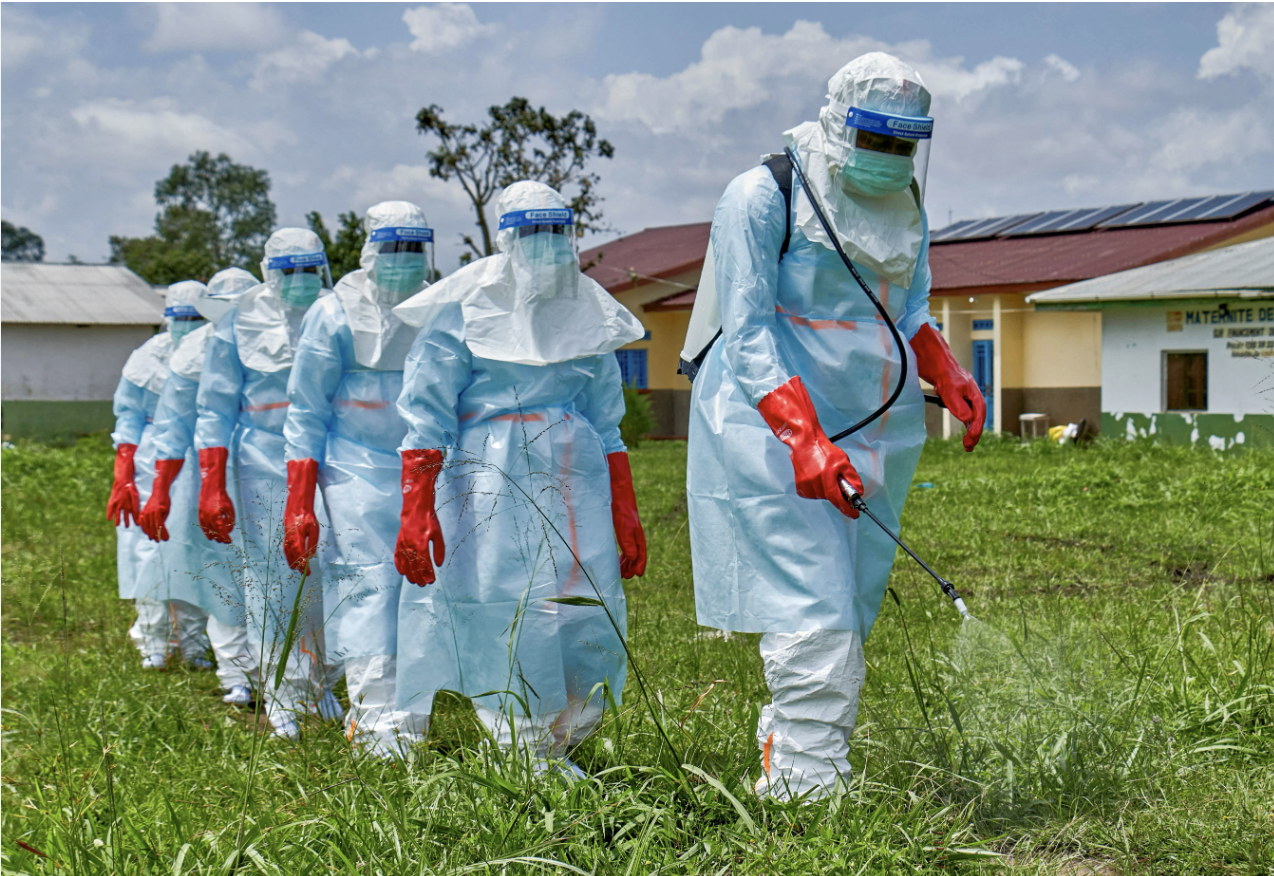
The Ebola Virus Disease (EVD) outbreak caused by the Bundibugyo strain continues to evolve across the Democratic Republic of the Congo (DRC) and Uganda, with increasing case numbers, ongoing transmission, and continued concerns regarding cross-border spread.
The World Health Organization (WHO) declared the outbreak a Public Health Emergency of International Concern (PHEIC) on 17 May 2026 following confirmation of cases beyond the initial outbreak area. Health authorities continue to monitor the situation closely as response efforts scale across affected regions.
Response-Med remains actively monitoring developments and will continue to provide updates as new information becomes available.
Overview
The outbreak is centred in eastern DRC, particularly in Ituri Province, which remains the epicentre of transmission. Confirmed cases have also been reported in North Kivu and South Kivu provinces, demonstrating continued geographic spread beyond the initial outbreak area. Uganda has reported imported cases linked to the DRC outbreak.
As of 3 June 2026:
- The DRC and Uganda have reported 378 confirmed cases and 63 confirmed deaths.
- DRC accounts for 363 confirmed cases and 62 deaths.
- Uganda has reported 15 confirmed cases and one death.
In both countries, thirty-four healthcare workers have contracted the virus. The absence of an approved vaccine or targeted treatment for the Bundibugyo strain continues to create significant challenges for outbreak control. Public health authorities are relying on rapid case detection, laboratory confirmation, contact tracing, infection prevention measures, community engagement, and supportive clinical care to contain transmission.
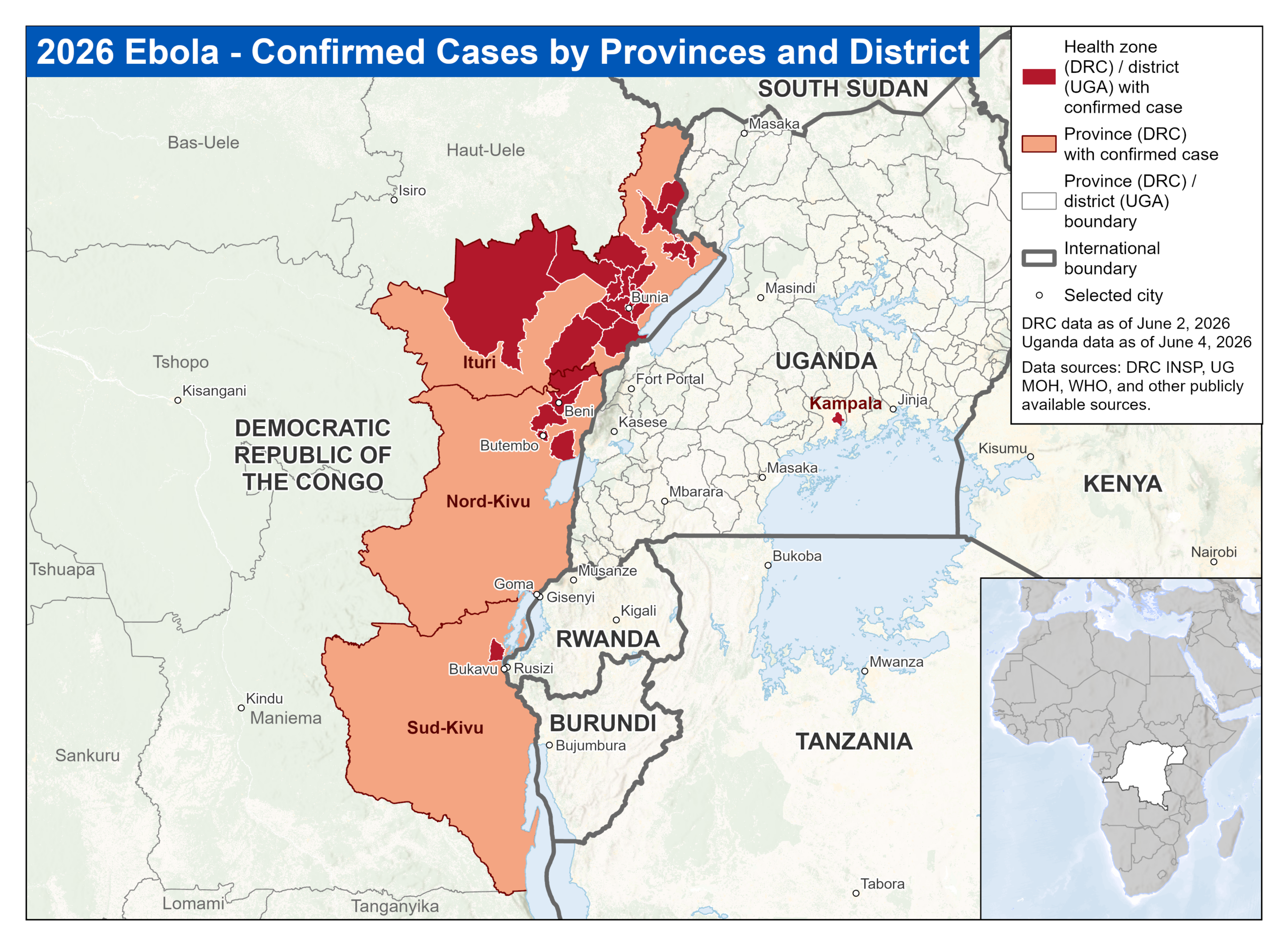
Map of confirmed Ebola cases (Credit: CDC).
Why This Outbreak Is Different
Unlike the Zaire strain of Ebola, which has approved vaccines and treatments available, there are currently no licensed vaccines or specific therapeutics approved for the Bundibugyo strain. Outbreak control therefore relies heavily on public health interventions and community cooperation.
The response efforts have also faced complications due to:
- Ongoing cross-border movement between the DRC and neighbouring countries.
- Community resistance to some public health measures.
- Healthcare worker infections.
- Security challenges are affecting access to areas impacted by the outbreak in eastern DRC.
- Delays in laboratory testing and sample transportation.
Health authorities have warned that these factors may contribute to continued transmission and a prolonged response effort.
Staying Informed
Travellers, organisations, and personnel operating in Central and East Africa should remain aware of the evolving situation and monitor official health advisories. Response-Med continues to monitor developments closely and will provide further updates as additional information becomes available.