

INTERNATIONAL SOS – Ebola Outbreak Declared Public Health Emergency in DRC and Uganda
By AAMEG | 28 May 2026
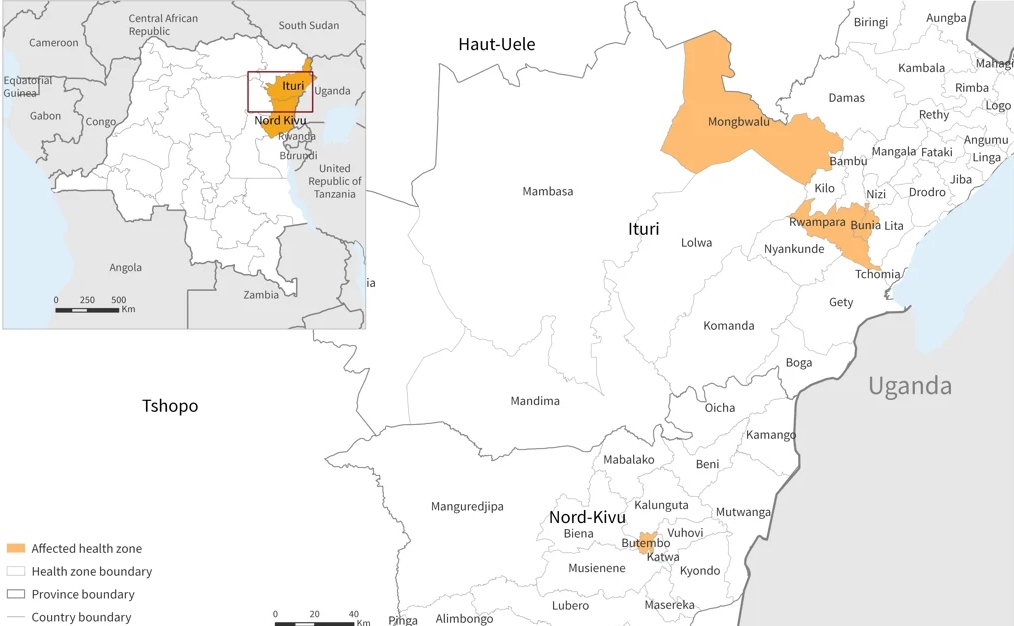
The World Health Organization (WHO) declared a Public Health Emergency of International Concern (PHEIC) on 17 May following the outbreak of Ebola in the Democratic Republic of the Congo (DRC) and Uganda. The situation is evolving rapidly, and the full scale of the outbreak remains uncertain. Authorities anticipate the outbreak may expand significantly, both geographically and in overall impact.
International SOS continues to closely monitor developments and is providing ongoing updates through its medical and security alerts, as well as via the Ebola section of the Global Health Threats website.
Overview
The Ebola outbreak was first declared on 15 May in Ituri Province, DRC. The index case is believed to have involved a nurse who was admitted to hospital on 24 April.
As of 17 May, there have been more than 390 suspected infections and 105 suspected deaths reported across the Ituri and North Kivu provinces. An individual in Kinshasa who had travelled from Ituri was initially reported as a confirmed case; however, subsequent testing determined the individual is no longer considered a confirmed infection. Uganda has also reported two confirmed imported cases in individuals who travelled from the DRC to Kampala. Authorities have confirmed that these cases are unrelated.
The outbreak involves the Bundibugyo strain of the Ebola virus, for which there is currently no approved vaccine or targeted treatment available.
The virus is affecting densely populated and highly mobile regions, including areas with significant cross-border movement, increasing the risk of further transmission. The large number of suspected infections is also creating significant challenges for effective contact tracing and outbreak containment. Health authorities anticipate that the response effort will persist for several months until they bring the outbreak under control.
The DRC has experienced multiple Ebola outbreaks previously. The most severe recent outbreak occurred between 2018 and 2020 and involved the Zaire strain of the virus, for which a vaccine is available. That outbreak affected both the Ituri and North Kivu provinces and spread across the border into Uganda, resulting in more than 3,000 cases and over 2,000 deaths before being declared over.
What is Ebola?
Ebola is a severe and often fatal viral illness, with an average fatality rate of approximately 50%.
Initial human infections typically occur through close contact with infected wild animals. The virus is believed to originate in bats and can spread to non-human primates before infecting humans. Human infection may occur through contact with infected animals, exposure to the bodily fluids of infected individuals, or contact with contaminated surfaces and objects.
The disease can then spread through human-to-human transmission within communities. Ebola is caused by several species of orthoebolaviruses (formerly known as ebolaviruses), which primarily affect internal organs and bodily systems.
Staying Informed
We encourage our community to stay informed through the latest medical and security updates provided by International SOS.